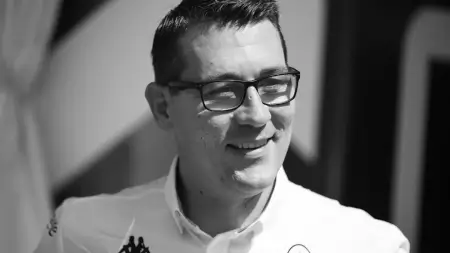




Formula E CEO Jeff Dodds Outlines Bold Vision for Gen4 Era and 2030 at Race Industry Week
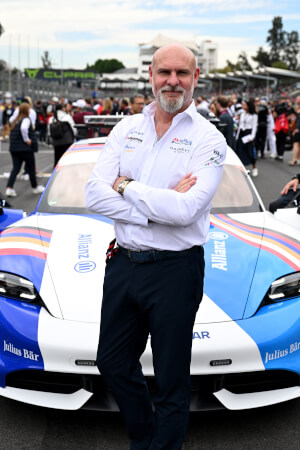
Speaking during Race Industry Week, Jeff Dodds, Chief Executive Officer of the ABB FIA Formula E World Championship, shared an ambitious roadmap for the all-electric series as it prepares to enter Season 12 – the final year of the Gen3/Gen3 Evo homologation cycle – and accelerates toward an even faster, more globally influential Gen4 era.
Dodds described the coming season as “super competitive,” noting that with teams now four years into the same regulatory cycle, the performance gap has tightened dramatically.
“By the end of a rules cycle, everyone has iterated and found most of the available performance,” he explained, pointing to pre-season testing in Valencia and the fact that last season saw a different winner in the majority of races. “It’s all to play for.”
Porsche’s Cayenne Electric Underscores Formula E’s Road Relevance
Dodds highlighted Porsche’s recently revealed Cayenne Electric as a powerful validation of Formula E’s role as a technology test bed for electric road cars.
Porsche has transferred key elements from its 99X Electric Formula E race car into the new Cayenne EV, including advanced energy management, recuperation strategies and software. The Cayenne features up to 600 kW of regenerative braking, matching the 99X’s regen capability.
Dodds, who experienced the car on track at Valencia as a passenger with official FIA Formula E safety car driver Bruno Correia, called it “one of the most advanced road cars in the world built from a race car.”
He noted that Porsche joins brands like Jaguar, Nissan, Stellantis and Mahindra in treating Formula E as a direct R&D pipeline from racetrack to road.
EV Adoption: From Niche to Global Shift
While public debate around electric vehicles continues, Dodds stressed that the long-term trend remains clear.
“When Formula E was founded 11 years ago, about 300,000 electric cars were sold globally that year,” he said. “This year, that number will be between 15 and 20 million.”
Citing industry forecasts, Dodds added that by 2030, annual EV sales are expected to roughly double again to 30–40 million units, despite short-term political or subsidy changes in different regions.
For Dodds, the transition away from internal combustion isn’t about ideology. “It’s grounded in physics,” he said. “Battery-electric cars are significantly more efficient, deliver instant torque, and we’re now seeing real-world ranges of 400–500 miles. And we’re not even at solid-state batteries yet.”
Built Around Sustainability: “Net Zero From Day Zero”
From its inception, Formula E was created with three pillars, Dodds said:
1. Build a world-class racing series.
2. Accelerate the energy transition to cleaner mobility.
3. Put sustainability at the core of the sport.
Today, Formula E is recognized as the most sustainable sport in the world and the No. 1 ESG-ranked global sport, with the championship operating as net zero under long-standing methodologies.
Key sustainability measures include:
- Powering events using low-carbon solutions such as hydrogenated vegetable oil (HVO) generators.
- No single-use plastics on site at races.
- Highly optimized logistics, moving the entire world championship using just two dedicated cargo aircraft alongside sea and road freight.
- A total annual carbon footprint of roughly 35,000 tons for the full world championship operation.
Dodds emphasized that Formula E’s sustainability work extends beyond the environment into social impact: leaving a positive legacy in host cities and addressing equity and access in motorsport.
Women in Motorsport: Opportunity, Not a Separate Ceiling
A central part of that social mission is widening access for women. Formula E expanded its official women’s test this year from half a day to a full-day program in Valencia, giving 14 of the world’s best female drivers extensive time in Gen3 machinery alongside structured coaching and data support.
“The gap between our championship drivers and the women testing has already come down significantly in just one year,” Dodds reported.
Formula E’s goal is to:
- Grow the base through programs like Girls on Track, encouraging more young women into karting and grassroots motorsport.
- Provide meaningful seat time in high-level cars so women can showcase talent and attract team interest.
However, Dodds was clear that Formula E is not planning a separate women-only series.
“In motorsport, men and women can compete equally,” he said. “If we create a separate women’s championship, we risk setting an artificial ceiling. Our focus is on creating real opportunities to race at the very top.”
Circuits Strategy: From Tight City Streets to “Road-Style” Venues Near Cities
Formula E began life as a pure city-center street racing championship, designed around the limitations of the early Gen1 car: lower speeds, shorter battery range and car swaps mid-race.
With Gen3 – and especially with Gen4 – the performance envelope has shifted dramatically, making some of those early layouts unsuitable.
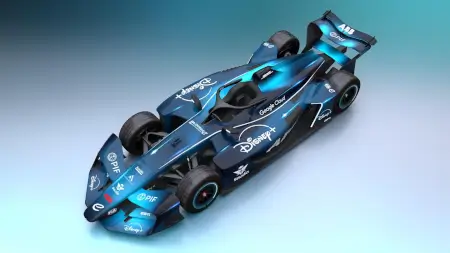
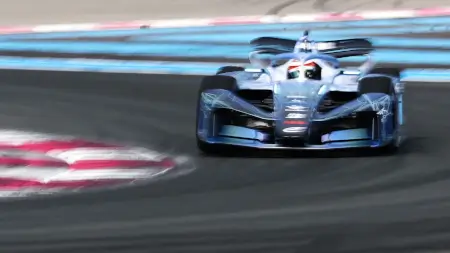
The forthcoming Gen4 car is expected to:
- Exceed 200 mph (320+ km/h).
- Deliver 0–60 mph acceleration in the region of 1.7–1.8 seconds.
- Approach the footprint and performance envelope of the 2026-spec Formula 1 car.
“It’s very hard to put that kind of car safely on some of the ultra-tight circuits we started with,” Dodds explained, using London’s ExCeL layout as an example where certain corners already bottleneck the current car.
Formula E’s future track strategy is focused on:
- Remaining close to major city centers for accessibility and sustainability.
- Using permanent facilities with ‘road course’ style layouts that suit high-performance EVs.
- Retaining select true street circuits in cities capable of safely hosting the new cars, such as Tokyo or São Paulo.
“That sweet spot is a road-style circuit in or beside a major city,” Dodds said. “You get great racing, world-class infrastructure, and fans can reach us easily without long car journeys.”
Global Growth: China Today, Two U.S. Venues Tomorrow
Dodds confirmed that Formula E’s footprint will continue to grow in strategically important EV markets.
- In China, where Formula E counts more than 100 million fans and where EV production is booming, Season 12 will feature two Chinese venues: Shanghai and Sanya, with the possibility of more in future.
- In North America, multiple events have long been an internal target.
“For Season 13, the first year of Gen4, I would fully expect two U.S. venues on the calendar,” Dodds said, while stopping short of announcing specific cities.
Gen4 and Beyond: From “Bamboo Roots” to Beating F1 Lap Times
Dodds used a striking analogy to describe Formula E’s evolution.
“Bamboo grows underground for years before you ever see it,” he said. “When it finally breaks the surface, it can shoot up 80 feet in a single year. For us, Gen1, Gen2 and Gen3 have been that root-laying phase.”
Gen4, he believes, is the moment when Formula E “breaks the surface” in mainstream perception:
- A car that is visually more aggressive and muscular, attractive to elite drivers who might previously have focused only on Formula 1.
- Performance that is “hot on the heels” of F1 for a fraction of the cost.
- A platform that will increasingly be impossible to ignore for manufacturers, drivers and fans alike.
Looking out to 2030, Dodds outlined a clear vision:
- Approximately 22 races per season around the world.
- A global fan base approaching 800 million to 1 billion people.
- Formula E established as the second-biggest motorsport in the world, including two-wheel categories.
- And, with expected advances in battery technology, a Gen5 car capable of faster lap times than Formula 1 on major circuits.
“By 2030, I want us sitting here talking about a championship that not only leads on sustainability and technology, but also outperforms anything else on track,” Dodds concluded. “That’s the trajectory we’re on.”