



NASCAR to roll out horsepower increase, sporting rules updates for 2027
NASCAR officials plan to wade into increasing engine output for the Cup Series next year, adding 80 horsepower at intermediate tracks midseason and auditioning an 800-horsepower engine package at the annual All-Star Race.
The announcement was part of a number of rules changes and sporting updates that NASCAR officials incorporated into its rule book Friday to set the course for 2027. The horsepower boost marks the second consecutive year that competition officials have raised engine power at select venues and will place a greater spotlight on events held in the month of May.
Target horsepower for intermediate-sized tracks will increase from 670 to 750, starting with the Coca-Cola 600 on May 30 at 1.5-mile Charlotte Motor Speedway, and the experimental short-track engine level is set to debut at the non-points All-Star event at 0.625-mile North Wilkesboro Speedway. That change brings the intermediate power level in line with the short-track and intermediate horsepower configuration, and the same tapered spacer that regulates engine output will be used at each of those track types.
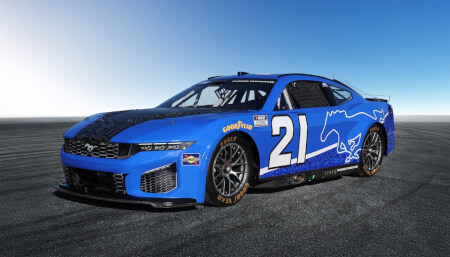
Competition officials made the move in response to ongoing calls by drivers, fans and others in the NASCAR industry for a power boost in its premier series, making the Next Gen race car introduced in 2022 more challenging to drive. The change is expected to place more demands on driver control, throttle finesse and tire management to create more passing opportunities.
NASCAR CEO Steve O'Donnell said during the annual “State of the Sport” address at Homestead-Miami Speedway that discussions about horsepower figures were “ongoing,” while acknowledging that “it's certainly a topic that we're looking at.” Friday's update brings those talks and visions closer to reality, with a midseason rollout providing more time for development.
“As always, we listen to our fans a lot. We get input from all the stakeholders in our sport, and it's probably one of the clearest messages that we get from all those directions is to add horsepower,” said John Probst, president of NASCAR Event Management. “I'll say, Steve O'Donnell, as he laid out in Homestead, we want to be bold, we want to be aggressive, but at the same time, we've got to be very deliberate in how we roll these types of changes out. When we work with the OEMs (manufacturers) and the teams and the engine builders, we were able to get to a spot where, starting at the 600 at Charlotte, we'll roll out that 750-horsepower package.”
Drivers welcomed last season's shift to a 750-horsepower level at shorter ovals and road-racing circuits, while lobbying for further increases. “I love where we're headed,” Joe Gibbs Racing's Christopher Bell said in March, after races at Circuit of The Americas and Phoenix Raceway with the package. “I always think that we could use more, and I would love to get more horsepower, and hopefully this is an indication that we're turning the right knob, and I think sky's the limit. If we continue to add horsepower, I think we're going to get right where we need to be.”
“Yeah, that's the right direction, right?” Team Penske's Ryan Blaney said last August, just after winning in New Hampshire Motor Speedway's first race with the 750-horsepower configuration in place. “That's how you get comers and goers, people who pass, who can haul on starts, have that pace. I thought it was good. Hopefully they keep working in the right direction.”
That direction has included a move toward softer tire compounds, working hand-in-hand with officials at Goodyear Racing, the sport's official tire supplier. That collaboration has yielded racing rubber that promotes more aggressive wear, emphasizing tire management for drivers and sharpening the focus on strategy for crew chiefs.
With no championship points at stake, the All-Star Race has long been a proving ground for potential rules, tire compounds, engine regulations and race formats. The event returns to historic North Wilkesboro next year after last season's edition at Dover Motor Speedway, and Probst hinted that aerodynamic alterations — still to be determined — could be part of the All-Star package. Should all go according to plan, Probst said, the package could reappear for the next short track on the schedule, Bristol Motor Speedway's annual night race in August.
“That's often a race where we look at it as an opportunity to try something pretty aggressive,” Probst said of the All-Star exhibition. “We look at this year as a great opportunity to try that for an 800-horsepower package and an aero package that we're still working some of the details out on to essentially show up the track with a high-horsepower, very low-downforce package, with the anticipation that if that goes well, we can immediately carry that aero package forward on the short tracks and road courses.”
Those horsepower increases were top of mind Wednesday, during the latest monthly meeting with NASCAR competition officials and the series' engine builders, who shared their views on the implementation.
“I think when we bring these things up to the industry, I'm proud to say that they always jump to the challenge,” Probst said. “I think, though, that when we say we want to be aggressive and bold and go, it means we're not afraid to make in-season changes and react to continually try to make what we already feel is the best racing on the planet better.”
The Cup Series will also race without splitter stuffers next season, removing those underbody pieces at every track on the schedule. Those components were added in the early days of the Next Gen platform to address the car's pitch sensitivity, Probst said, addressing the drivers' No. 1 feedback request to make the aerodynamic balance of the nose more predictable as it traveled. Years later, with teams and drivers more comfortable with the Next Gen handling characteristics, Probst called it “a great opportunity” to remove those stuffers.
“I would expect it to create some variability across different setups, for sure, certainly ones that allow more front travel, and either helping or hurting the performance or balance of the car,” Probst said. “So I think that it will appear as not a big change, but I think a lot of the changes we're making, including the horsepower, have the potential to be a curveball for the teams as we unload at that first short track or road course next year.”
For more Industry News, please Click Here