



World Of Outlaws Ceo Brian Carter Outlines Growth, Challenges And 2026 Vision
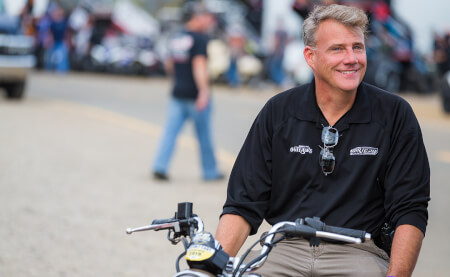
During Race Industry Week, Brian Carter, President & CEO of World Racing Group and the World of Outlaws, shared an in-depth look at how the World of Outlaws continues to grow as one of the most demanding and authentic championships in motorsports—while simultaneously investing in digital innovation, fan engagement and long-term sustainability for racers, tracks and partners.
From year-round racing and a stacked 2026 calendar to the success of DIRTvision and the emergence of new stars like David Gravel and Bobby Pierce, Carter painted a picture of a paddock that is as intense behind the scenes as it is on track.
A “Non-Season” in Dirt Racing
While many series talk about an off-season, Carter noted that for the World of Outlaws, the break is almost symbolic.
“We go back racing in January,” he said. “It’s a very short period of time to catch our breath, get everything serviced, and get it back out on the road. It’s nonstop.”
With 26 series across 32 states—from karts and 4-cylinders to UMP Modifieds, big-block Modifieds, Late Models and 410 Sprint Cars—World Racing Group oversees the full ladder of dirt racing. The World of Outlaws Sprint Car and Late Model tours sit at the top of that pyramid, recognized globally as the pinnacle of dirt racing.
That relentless calendar is part of the DNA of the brand.
“It’s a literal circus of speed,” Carter said. “Our guys are racing almost every week from February through November. That’s exactly what our fans and competitors expect from the World of Outlaws.”
Building Fans for Life in a Changing Media World
Carter emphasized that the central mission hasn’t changed: turning casual viewers into lifelong fans by connecting them with the personalities and stories in the pit area.
“We want to create that connection to the race fan,” he explained. “These titles and wins mean so much because of the commitment and heartbreak behind them. There are incredible stories of families, careers and sacrifice. Our job is to make those personal.”
To reach new and younger audiences, World Racing Group has been aggressive in embracing modern platforms:
- DIRTvision, the group’s in-house streaming service, has become a cornerstone of the business
- Social media and short-form video bring World of Outlaws action to fans’ phones
- At-track production with large video boards and driver features helps fans connect names and faces
- Video-on-demand libraries allow fans to curate their own “greatest races” playlists going back decades
“The world has migrated to being engaged in your hands,” Carter said. “But the end goal is still the same: get them from the phone to the racetrack.”
DIRTvision: A Bold Bet That Paid Off
One of the boldest moves under Carter’s leadership has been the decision to build and own their own streaming platform, rather than relying solely on outside broadcasters.
“DIRTvision started as the production arm for ‘This Week on Dirt’ in Syracuse,” Carter recalled. “We really began evolving it into what it is today in the early 2010s, then moved heavily into streaming around 2017.”
Today, DIRTvision delivers hundreds of live events each year, plus a deep archive of historic content. Importantly, Carter sees every subscriber as a direct investor in the sport.
“Everyone who supports DIRTvision is essentially a sponsor of dirt racing,” he said. “Those dollars are reinvested back into the sport—into purses, promotions and infrastructure. That’s something very few platforms can say.”
Most video-on-demand content is free, encouraging fans to register, dive into the library, and build their own connection with the history and personalities of dirt racing.
The Live Experience Remains the Core
Despite the success of digital platforms, Carter is clear: the live event is still the heart of the business.
“Butts in seats is absolutely the most critical thing,” he said. “That’s where you create commerce for everybody—purses for the racers, revenue for the tracks, camping, concessions, and economic impact for the local communities.”
To feed that live ecosystem, the media platforms function as a funnel:
- Awareness via social, highlights and streaming
- Deeper engagement via full-race viewing and historical content
- Conversion to in-person attendance, where fans get to meet drivers and teams
“Our pits are open,” Carter emphasized. “Buy a pit pass, sign the waiver, and you’re in. You can talk to the drivers, meet their families, see the cars up close. That’s where you create a lifelong fan.”
Stable Rules, Real Racing
On the technical side, Carter stressed that regulation stability is a deliberate strategy.
“In sprint cars especially, we’ve worked hard to keep the rules consistent,” he said. “Every time you drastically change rules, you’re forcing teams to spend money.”
World Racing Group focuses rule changes on safety and parity, not constant reinvention.
“Racers are always trying to outrun us on the rulebook,” he added with a smile. “They want to go faster and find an edge. We dial them back in when we have to. But the good news is we don’t have to manufacture racing. The product on track is so visceral and real that our job is mostly to set the stage and let them put on a show.”
Sponsorship, Sustainability and Making Racing a Living
Carter also highlighted the importance of sustainable economics for teams, tracks and sponsors.
“The money has always come from three places: race fans, sponsors, and now broadcasting/streaming,” he said. “You can’t get any of those out of balance.”
With DIRTvision data and global reach, World Racing Group can now provide sponsors with robust metrics and demonstrable ROI, supporting both series-level partners and team sponsors.
“My job is to make as many livings as possible around the racetrack,” Carter said. “There are people who race for a living in the World of Outlaws. Others might not be full-time, but when we come to their town, they can still be competitive. That mix is important.”
Stars, Storylines and the “Changing of the Guard”
On the competitive front, Carter is excited by the depth of talent and the constant evolution of World of Outlaws stars.
He highlighted:
- David Gravel – back-to-back World of Outlaws NOS Energy Drink Sprint Car champion
- Bobby Pierce – dominant force in World of Outlaws CASE Construction Equipment Late Models
“David is a great champion with a young family and a strong, consistent team behind him,” Carter said. “He understands the commerce side too—he’s doing cooking content, chocolate milk reviews, he’s building his brand.”
“Bobby’s got a target on his back,” he continued. “He’s fast anywhere he goes, and the whole Pierce family has racing in their DNA. Everyone wants to beat Bobby Pierce. Everyone wants to beat David Gravel. That’s what you sign up for as a champion.”
With rising names like Sheldon Haudenschild, Logan Schuchart, Carson Macedo, Buddy Kofoid and others, Carter sees a healthy, organic “changing of the guard”.
“From Steve [Kinser] to Donny [Schatz] to Brad [Sweet] to David [Gravel] and whoever comes next—it just keeps rolling,” he said. “We’ve easily got 10 drivers who can win on any given night, and 20 who can win when everything lines up. That’s what makes this so compelling.”
Listening to Racers, Respecting Families
Asked what racers would say is their biggest challenge, Carter pointed to time and cost—particularly for drivers with growing families.
“Racing isn’t cheap and we’re not going to pretend it is,” he said. “The cost of equipment, travel, trailers, hotels—it all adds up. And our guys are on the road a lot.”
World Racing Group has started to build in intentional breaks to support family life, including giving teams Fourth of July weekend off, and now experimenting with an off weekend over Easter.
“Some racers want a break; some racers want to race for a living and never stop,” Carter said. “You’ll never make everyone happy, but we’re listening and trying to strike a balance.”
The Path to the World of Outlaws
For young drivers aspiring to reach the World of Outlaws level, Carter described a flexible but well-populated ladder system.
“Most come up through karts, mini sprints or micro sprints, and 305 or 360 sprint programs,” he said. “There are also regional series like ASCS and many local dirt tracks that offer realistic stepping stones.”
With strong local ecosystems and a national stage to aspire to, the pathway is there—though Carter cautions that drivers shouldn’t expect to jump straight into a World of Outlaws 410.
“You’re not going to just hop in a car and be ready,” he said. “But there are so many opportunities at local dirt and kart tracks. That’s where the next generation is developing right now.”
Looking Ahead to 2026
With the 2026 World of Outlaws CASE Late Model schedule already announced and the NOS Energy Drink Sprint Car calendar close behind, Carter is energized by the consistency and momentum heading into the new season.
“I’m excited that we can focus on growing, not fixing,” he said. “We have strong partners, strong race tracks, strong teams. Now it’s about telling more stories, bringing more fans, and making sure everyone who touches this sport—racers, tracks, communities, fans—can keep winning.”
His final message to the Race Industry Week audience was one of gratitude and invitation.
“To everyone who buys a ticket, watches on DIRTvision, or manufactures parts for dirt teams: thank you,” Carter said. “If you’ve never been to a World of Outlaws show, come to one. And if you already come, bring a friend. Our job is to keep you interested. Your job is just to show up and let the ‘Greatest Show on Dirt’ do the rest.”