



National Auto Sport Association Showcases Growth, Innovation and Community at Race Industry Week
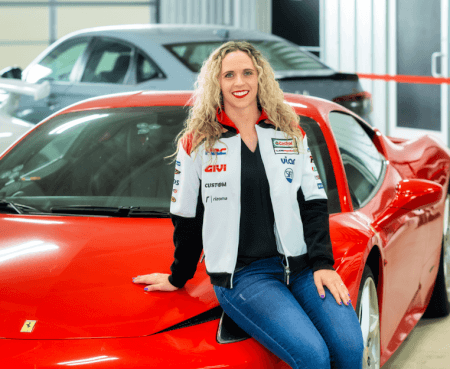
During this year’s Race Industry Week, Marie Adams, Director of Operations for the National Auto Sport Association (NASA), shared how the organization is expanding opportunities for drivers at every level – from first-time HPDE participants to national champions – while continuing to grow its national footprint and strengthen ties with OEM partners.
Founded in 1991, NASA has evolved into one of the most comprehensive grassroots motorsports organizations in the United States, hosting more than 250 events annually at over 40 tracks nationwide. With 16 regions – including Hawaii – NASA uniquely blends HPDE (High Performance Driver Education), Time Trial and wheel-to-wheel racing into the same weekend, offering a full development ladder under one umbrella.
“What makes NASA special is that you can see all three paths at one event,” Adams explained. “HPDE, time trial and racing all live together in the same ecosystem.”
A Ladder for Every Driver: HPDE to Racing
Adams highlighted NASA’s signature four-level HPDE structure, designed to make the transition from street driver to track driver safe, structured and welcoming:
- HPDE 1 – Every new driver is paired with a right-seat instructor for hands-on, in-car coaching. Post-session debriefs help drivers process what they felt and saw on track.
- HPDE 2 – Drivers begin running solo while still receiving close guidance and classroom support as they build confidence.
- HPDE 3 & 4 – Advanced groups where some drivers stay permanently as “track day lifers,” while others begin preparing for Time Trial or wheel-to-wheel racing.
Adams noted that many enthusiasts are perfectly happy keeping their cars streetable and enjoying HPDE, while others chase every last tenth of a second and build toward full race programs. NASA’s structure supports both equally: “There’s truly something for everyone.”
Coast-to-Coast Reach – and a New Northwest Region
NASA’s footprint now touches almost every corner of the U.S., including Hawaii, which currently runs rallycross events. One of the biggest operational milestones Adams announced was the creation of a new Northwest region, filling in the final “gap” on the NASA map.
The new region will serve tracks such as The Ridge Motorsports Park, Oregon Raceway Park and Pacific Raceways, complementing existing regions in Utah, Northern California, Rocky Mountain and others.
“With almost every weekend of the year hosting one or more NASA events somewhere in the country, if there’s a track you dream of driving, chances are we’re there,” Adams said.
Drivers can search events by region or track via the schedule at drivenasa.com.
Toyota GR & NASA: Turning Owners into Track Drivers
A standout success story is NASA’s partnership with Toyota’s GR (Gazoo Racing) program, which began in 2019.
Every buyer of a GR Supra, GR86 or GR Corolla receives:
- A free NASA membership
- One complimentary NASA track day
This program has introduced an entirely new demographic to organized track driving – many of whom had never even considered taking their car on a racetrack.
“These owners often show up with the packet they got in the mail and no idea what to expect,” Adams said. “We build special GR groups, assign liaisons, and walk them through everything – from tech to paddock parking – so the experience is welcoming from the moment they arrive.”
Toyota GR models also serve as pace cars at NASA’s National Championships, most recently at Ozarks International Raceway.
National Championships: Moving the Show and Raising the Bar
NASA’s National Championships remain the organization’s flagship event, rotating among major U.S. tracks to keep the competition fresh and accessible for different regions.
Since beginning the rotation in 2013, NASA has brought the Championships to iconic venues around the country. In 2025, the championships were staged at Ozarks International Raceway, a technical, driver-focused circuit where NASA also leveraged the track’s sector timing to add depth and excitement to the Time Trial broadcast coverage.
Looking ahead, Adams confirmed the next National Championships will be held at Sebring International Raceway, September 24–27, bringing NASA competitors back to the historic Florida circuit for the first time since 2017.
“Sebring is the kind of name that makes people cross the country,” she said. “It’s a bucket-list track for many of our members, and we expect one of our biggest championships yet.”
Planning for the event is a nine-month effort, involving 80–120 NASA staff across race control, timing and scoring, tech, impound and operations. While the racing is the core, NASA continues to explore ways to enhance the festival feel with family activities, kids’ entertainment and off-track experiences.
Time Trial, New Spec Classes and the Hoosier Shift
NASA also continues to push innovation in its Time Trial (TT) program, which has grown to rival race-group sizes in many regions. With power-to-weight-based classes (TT1–TT6 plus Unlimited), Time Trial appeals to drivers who want serious competition without fully committing to a race-prepped, caged car.
On the racing side, Adams announced several key developments:
- Spec Miata moves to Hoosier – NASA’s long-standing Spec Miata class transitions from Toyo to Hoosier tires, bringing new setup challenges and fresh parity.
- New Spec MX-5 class – Spec MX-5, previously folded into NASA’s Super Touring categories, will become a stand-alone national class starting in 2026.
- Corvette Cup – A new spec series designed to fill the gap between low-power spec cars and high-budget builds, offering more speed at a controlled price point for drivers who want more horsepower without exotic budgets.
“These new classes give racers more options at different budget and performance levels,” Adams said. “We want fast, exciting cars that are still attainable.”
Giving Back: Toy Runs, Rewards & Autocross
NASA’s community-first philosophy extends beyond the racetrack:
- Holiday Toy Runs – Regions such as Texas and Southeast run year-end toy drive events, collecting donations for local charities while giving members a fun, festive final weekend of the season – complete with Santa in pit lane waving the green and checkered flags.
- HPDE Rewards & Instructor Benefits – NASA has launched a unique rewards program that grants credits and product benefits (Toyo, Hawk, Summit Racing and others) as drivers progress through HPDE levels or serve as instructors.
- Autocross Expansion – With five to six active autocross regions and more planned, NASA is strengthening the gateway into its HPDE and racing ecosystem. Many members find NASA after starting at a local autocross, and Adams sees huge potential to grow that entry point nationwide.
Collaboration Across Grassroots Motorsports
Adams emphasized that cooperation with other sanctioning bodies – including SCCA, Gridlife and others – is essential to keep grassroots motorsports healthy.
“The motorsport world is too small for us not to be allies,” she said. “We all share the same passion. The goal is the same: grow grassroots racing and give people more ways to enjoy their cars.”
For more information about NASA programs, regions, and events – including HPDE, Time Trial, racing, autocross, and the National Championships at Sebring – visit drivenasa.com.