



Honda Racing Corporation USA Charts the Future of Motorsport with Technology and Talent
Two years after the historic transition from Honda Performance Development (HPD) to Honda Racing Corporation USA (HRC US), the transformation is proving to be far more than a simple name change. It represents a new era of global alignment, technical collaboration, and commercial expansion for Honda’s racing operations in the United States.
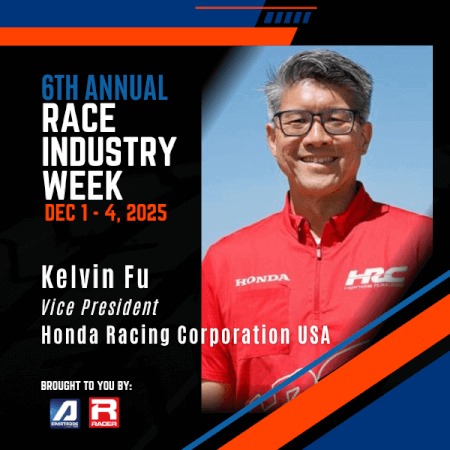
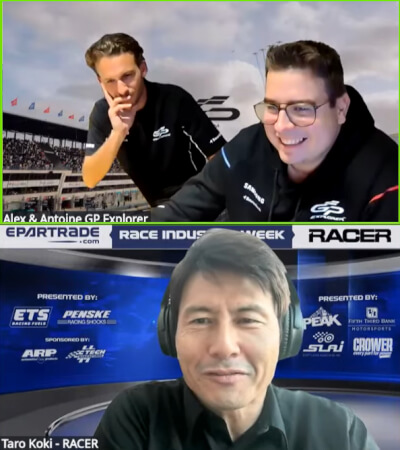
In a recent interview, Kelvin Fu, Vice President of HRC US, detailed how the integration under the global HRC banner has already reshaped the organization’s reach, capabilities, and future direction across multiple racing platforms.
“Internally, it’s been amazing what a relatively small name change has done,” said Fu. “Doors opened that we didn’t even realize were there. We’re now truly unified with Honda Racing globally, and that has created powerful connections across Japan and the United States — both technically and culturally.”
A Unified Global Racing Brand
For three decades, HPD served as Honda’s cornerstone for American motorsports. With the 2024 transition to HRC, Honda’s two-wheel and four-wheel racing operations now operate under one globally recognized brand. The restructuring also introduced a new business division led by former Acura executive John Ikeda, enabling HRC to expand beyond racing programs into performance parts, merchandise, and historic racing initiatives.
“This is the first time we are truly blending top-level racing, technical development, and business commercialization under one unified banner,” Fu explained. “It’s not only about winning races anymore — it’s also about creating long-term brand value.”
Engineering the Acura GTP Program in IMSA
One of the most significant developments for HRC US this season was assuming direct race-engineering responsibilities for the No. 93 Acura GTP entry in IMSA, in partnership with Meyer Shank Racing. The move placed HRC engineers directly on the pit stand, calling strategy and running competition operations.
“We go racing to develop technology and to develop people,” Fu said. “Putting our engineers on the pit stand accelerated their growth enormously. We promoted internally, built the team quickly, and Meyer Shank delivered an incredible level of collaboration.”
The season produced four pole positions and two race wins, including a standout victory at the Detroit Grand Prix.
“Detroit was a culmination of everything we worked toward,” Fu noted. “But more importantly, we built a true team culture with outstanding drivers and engineers working together.”
The No. 93 and sister No. 60 Acura programs will continue in 2025, with the manufacturer’s championship firmly set as the primary objective.
“Our goal is always the manufacturer’s championship,” Fu said. “Until we achieve that, the mission is not complete.”
Dominance in IndyCar and the Hybrid Era
HRC US enjoyed a historic season in the NTT INDYCAR SERIES, securing the Indianapolis 500 victory, the manufacturer’s championship, the drivers’ championship with Alex Palou, and 12 race wins overall.
“To achieve that level of performance at this stage of engine development — when there’s very little left to find — is a testament to our engineers, teams, and drivers,” Fu said. “Every Honda team contributed points this season. That’s something we’re extremely proud of.”
The 2024 introduction of hybrid power into IndyCar competition presented new challenges and opportunities, particularly with driver-managed energy deployment and regeneration systems.
“There is nothing like putting a new technology into competition,” Fu said. “Qualifying at Indy with the hybrid system taught us a tremendous amount in a very short timeframe.”
Formula 1, Global Technology Exchange, and Talent Growth
With Honda’s imminent return to Formula 1 as a works partner with Aston Martin, HRC US engineers are now fully embedded in global development efforts while maintaining strict technical confidentiality.
“We’re gaining alignment, best practices, and a massive cultural exchange,” Fu explained. “American racing is fast-paced and short-cycle. F1 is ultra-high-end. The knowledge transfer benefits both sides.”
Electrification has also reshaped HRC’s workforce.
“Our electrical and software engineering groups have exploded in size over the last five years,” Fu said. “LMDh and hybrid systems are extremely software-driven, and that’s attracting a new generation of engineers who want to work at the intersection of racing, electrification, and advanced computing.”
Evaluating the Future: NASCAR, Electrification and Beyond
Speculation continues regarding a potential Honda entry into NASCAR. Fu confirmed that all global racing series remain under review, including NASCAR, Formula E, Extreme H, and others.
“Everything is under consideration,” he said. “But these decisions are complex. We evaluate technical relevance, brand alignment, ROI, viewership, market activation, and long-term product strategy.”
Honda’s production roadmap — including electrification, hybridization, and hydrogen — plays a key role in determining future racing involvement.
“The rules in IMSA allow us to visually tie production styling into our race cars,” Fu added. “That’s where American Honda gets especially excited — when racing directly reflects future road cars.”
Technology Transfer and the Role of AI
Beyond powertrain electrification, HRC US is actively monitoring advancements in artificial intelligence, autonomy, and sensor fusion.
“Our job isn’t just to win races,” Fu said. “It’s to develop technology and feed that knowledge back into Honda production engineering. Racing is our fast-paced laboratory.”
HRC engineers already present technical discoveries annually to Honda’s production engineering teams in Japan — reinforcing racing’s role as an incubator for future automotive innovation.
Looking Ahead: Daytona, Championships, and Continuous Progress
As preparations intensify for the Rolex 24 at Daytona, Fu emphasized both the challenge and opportunity of endurance racing.
“It’s about surviving 22 and a half hours to fight in the final 90 minutes,” he said. “We have the drivers, the teams, and the preparation — now it’s about execution.”
Despite massive organizational change, new technologies, and intensified global integration over the last five years, Fu sees the current era as one of the most exciting in Honda racing history.
“The industry is changing rapidly — technically and commercially,” he said. “But change brings opportunity. It’s a fascinating time to be in motorsport, and we’re just getting started.”