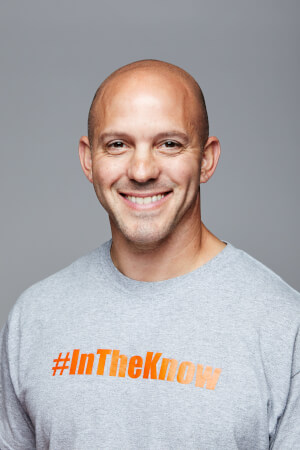




Rodi Basso on Launching E1: How Electric Powerboat Racing Is Shaping the Future of Water Mobility
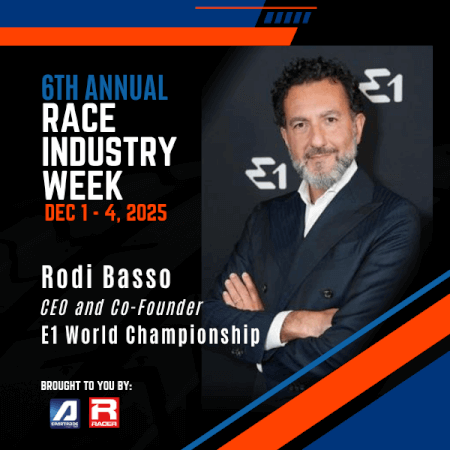
During Race Industry Week, EPARTRADE welcomed Rodi Basso, Founder and CEO of the E1 Series, the world’s first all-electric powerboat championship. In a wide-ranging interview, Basso shared the origins of the series, the technological vision behind the groundbreaking RaceBird boat, and how E1 is redefining sustainable competition on water while attracting global stars, manufacturers, and city hosts.
The idea for E1 was born five years ago during the height of the COVID pandemic. While living in London, Basso began discussions with Alejandro Agag, the visionary founder behind Formula E and Extreme E. What started as support for a small electric boat startup quickly evolved into something much bigger. Drawing on his extensive background in Formula One, McLaren, and Magneti Marelli, Basso outlined a bold strategy to create not just a boat series, but a global laboratory for electric propulsion on water. The concept quickly gained momentum, culminating in a historic agreement with the Union Internationale Motonautique (UIM), granting E1 25 years of exclusivity as the World Electric Powerboat Championship. The agreement was signed in Monaco in the presence of H.S.H. Prince Albert, officially launching the championship.
From the beginning, E1 was designed as more than just a racing series. Basso explained that the championship sits at the intersection of sport, entertainment, sustainability, and future mobility. Learning from the experiences of Formula E and Extreme E, E1 focused first on building premium live events in iconic coastal cities rather than immediately chasing broadcast reach. This strategy created strong engagement with decision-makers in business and government while building the brand organically through high-profile locations such as Venice, Miami, Dubrovnik, Jeddah, Doha, and Lagos.
At the heart of the championship is the RaceBird, E1’s purpose-built electric raceboat. Designed using principles transferred from motorsport engineering, the boat utilizes hydrofoils to lift the hull above the water at speed. Because water is roughly 800 times denser than air, reducing drag through foiling allows for massive gains in efficiency and acceleration. Thanks to this approach, the RaceBird’s battery accounts for less than 20 percent of the vessel’s total weight—an extraordinary achievement for a first-generation electric raceboat. Current top speeds reach approximately 52 knots, yet Basso emphasized that efficiency and acceleration, not outright speed, are the core performance targets for the series.
Looking ahead, Basso confirmed that future generations of the RaceBird are already under development. Key areas of evolution include the propulsion system, battery architecture, and foil design. While speed will increase incrementally, E1’s long-term engineering philosophy prioritizes sustainable performance that aligns with the realities of congested urban mobility and environmental responsibility.
One of E1’s most distinctive features is its team ownership model. Celebrity and business leaders from around the world have invested in teams, drawn by both the purpose-driven mission of the series and its strong early financial performance. According to Basso, investor confidence has been validated by solid commercial results, reinforcing E1’s status as both a sporting and business success.
The championship has also attracted a unique mix of driving talent. Competitors come from powerboat racing, jet skiing, sailing, and motorsport, including well-known racers such as Timmy Hansen, Katie Munnings, and Sarah Price. To prepare drivers for the unique demands of electric foiling boats, E1 created a dedicated driver academy. While motorsport drivers initially faced a steep learning curve adapting from cars to boats, their experience with electronic controls, race strategy, and rapid decision-making allowed them to adapt quickly. Within just a few events, many were already competing at the front of the field.
E1 also stands apart as one of the few motorsport series with mixed-gender driver lineups, with male and female pilots racing together on each team. With competitors representing more than a dozen nationalities—and even an Olympic medalist among the grid—the championship reflects E1’s global and inclusive vision.
With Season 2 concluding in Miami in front of more than 1,600 hospitality guests over two days, Basso highlighted the intense competitiveness of the championship, which was decided at the final race. Looking toward 2026 and beyond, E1 plans significant expansion, particularly in the United States, where recreational boating represents approximately 75 percent of the global leisure marine market. Asia is also a major focus, with strong interest in hosting races in markets such as Japan, Singapore, Thailand, and Vietnam. Africa, following a successful Lagos event, is expected to play an increasingly important role as well.
For Basso, E1 represents far more than racing. It is a platform to showcase how electric propulsion, sustainable innovation, and elite competition can work together to shape the future of marine mobility. As the championship continues to grow, E1 is positioning itself not only as a global sporting property, but as a catalyst for change across the broader blue economy.