



Frederic Lequien Outlines a “Golden Era” for the FIA World Endurance Championship
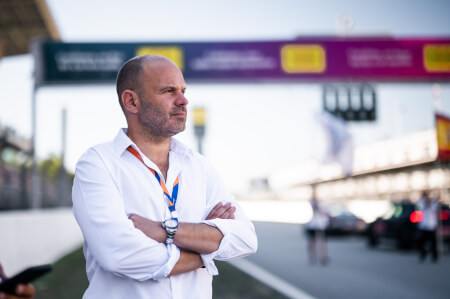
Speaking during EPARTRADE’s Race Industry Week, Frederic Lequien, CEO of the FIA World Endurance Championship (WEC), offered a wide-ranging look at the series’ explosive growth, technical philosophy, and long-term roadmap as it heads into what he called an “amazing” next chapter.
With the Hypercar class continuing to attract major manufacturers, the addition of Genesis bringing the grid to eight marques (and more on the way), and the 24 Hours of Le Mans stronger than ever as the centerpiece of the championship, Lequien was candid about what’s working, where the series is headed, and why OEMs see WEC as one of the best returns on investment in global motorsport.
Hypercar: Why the Manufacturers Keep Coming
Lequien credited the success of the Hypercar category to a combination of sensible budgets, technical freedom, and strong brand value.
“We came out of the LMP1 era with fantastic but very expensive cars,” he explained. “What we offer now is a regulation set that’s competitive, relevant and financially reasonable for OEMs.”
According to Lequien, current manufacturer budgets typically sit in the range of €25–35 million per season, covering eight world championship events around the globe. The ruleset allows two paths – LMH and LMDh – giving brands the choice between building a full prototype or a platform based on a global architecture while still racing for overall wins at Le Mans and in the WEC.
Just as important is WEC’s approach to the Balance of Performance (BoP).
“It’s just a tool,” Lequien stressed. “The best competitor will still win the race. We recently sat more than ten manufacturers around the table and asked, ‘Do you want to get rid of BoP?’ Every single one said no – they need it, but they want us to talk about it less. It’s simply there to keep everyone in a performance window.”
Stability, Long-Term Commitments and a “Sold-Out” Paddock
For manufacturers committing hundreds of millions over a program’s life, regulatory stability is non-negotiable. WEC has homologation locked through 2029, with discussions already underway to extend to 2030.
“Stability is key,” Lequien said. “If you change the rules every two years, you are not sustainable. OEMs need a clear view of the future.”
Looking ahead, Lequien confirmed that the championship is actively exploring ways to simplify the technical platform in the next cycle – potentially moving to a single base rule set while reducing dependence on BoP – but emphasized that diversity and fairness both matter.
At the same time, manufacturer demand has reached unprecedented levels.
“In 2027, we’ll have nine or even ten Hypercar OEMs,” he noted. “We’re very aware that it may actually be too much – only one can win. The trick is maintaining a strong return on investment for all of them. Right now we are, frankly, sold out across all platforms – WEC and the European Le Mans Series. For most of my career, I was calling people to find entrants. Now, everyone is trying to get in. It’s an amazing situation for endurance racing and for motorsport as a whole.”
Le Mans: The Crown Jewel – and the Championship Grows Up Around It
Lequien was clear: without the 24 Hours of Le Mans, the WEC would not exist in its current form.
“Le Mans is more than the cherry on the cake,” he said. “It’s probably the most important race in motorsport. But in the last five years, we’ve put enormous energy into making the world championship title matter just as much to manufacturers.”
He recalled conversations with Ferrari Chairman John Elkann and Ferrari GT Racing Director Antonello Coletta:
“They were very clear: ‘We must be world champion. We want to be world champion.’ Five years ago that mindset was different. Now Le Mans is still the icon, but being FIA World Endurance Champion is a strategic goal for the OEMs.”
The racing itself has underlined the value of that title. Lequien pointed out that after 24 hours at Le Mans, the gap between Ferrari and Porsche for the overall win was just 14 seconds.
“Sometimes in other series you see 25 or 30 seconds between first and second after a much shorter distance,” he said. “In WEC, whether it’s six hours or 24, the competition is incredibly close. That’s the show.”
Eight Races, Global Calendar – and the Art of Not Overdoing It
The 2026 WEC calendar will again feature eight rounds, with no changes in venues – only a slight compression of the season for better momentum. The Lone Star Le Mans event at Circuit of The Americas will continue to build on its Labor Day weekend anchor in the U.S. market.
“Building the calendar is one of the hardest parts of the job,” Lequien admitted. “You have to avoid clashes with key partners like IMSA, manage logistics, and work with local promoters’ available dates. Sometimes you can’t just choose your perfect slot.”
While he acknowledged that one additional European round in 2027 is under consideration, Lequien cautioned against over-expansion.
“We’d all like more races for coverage and ROI,” he said. “But we also have to protect budgets. The balance is very fragile.”
Long Races, Long Attention Spans – and a Digital Strategy That Works
By definition, endurance isn’t a 90-minute content product – and WEC has leaned into that reality with a hybrid media strategy.
“For core fans, the long format is fantastic,” Lequien said. “Six-hour races, two classes on track, constant overtaking, traffic management – there is action all the time. But for traditional broadcasters, dedicating six continuous hours of airtime is difficult.”
To bridge that gap, WEC has invested heavily in:
- Its own WEC TV app, offering full live coverage and data for dedicated viewers
- A powerful social and YouTube presence, where the championship now boasts roughly 1.2 million subscribers on its YouTube channel
- Highlight formats and storytelling tailored to “the Netflix generation”
“We know who we are,” Lequien said. “We don’t pretend to be something else. Our job is to give hardcore endurance fans everything, and at the same time create digestible content that attracts new fans who might first discover us through a clip or a short video.”
Hydrogen, Biofuels and Real Sustainability – Not Greenwashing
Looking beyond performance, Lequien emphasized WEC’s commitment to pushing real-world sustainable technologies.
On hydrogen, he highlighted the ongoing Mission H24 program, which is developing a full hydrogen-powered prototype with the aim of racing at Le Mans in the coming years.
“For long races, it’s not serious to bet everything on EV right now,” he said. “For endurance, hydrogen is clearly a key part of the future. We’re investing heavily, learning all the time in partnership with the FIA. The decision to use liquid hydrogen changed a lot – tanks, systems, everything – but that’s the path we’re on.”
On the fuel side, WEC was the first world championship to adopt a 100% sustainable biofuel developed with TotalEnergies – much of it derived from the by-products of the wine industry.
“It’s very French,” Lequien joked. “But it reduces CO₂ emissions by about 75%. We’re not talking about what we will do someday – we’ve already done it, and now other major series are using the same product. That’s not greenwashing. That’s implementation.”
Logistically, WEC also works with DHL and other partners to prioritize sea freight over air freight wherever feasible. Lequien noted that the on-track racing accounts for roughly 1.5% of the overall event carbon footprint – but said the series still feels pressure to lead by example.
“I’m surrounded by people in the company who are 25 to 30 years old,” he said with a smile. “Believe me, I feel the pressure. They expect us to act, not just talk.”
Drivers vs. Brands: Who’s the Star?
With high-profile names such as Jenson Button, Mick Schumacher, and others cycling through the WEC paddock, Lequien was asked if the series relies on star drivers or star brands.
“We’re always happy to welcome big names,” he said. “But we must respect the specialists who’ve been in endurance for years. Some of our best drivers aren’t as famous outside our world, but they are absolutely top-level.”
Ultimately, WEC’s core identity remains manufacturer-driven, with the Ferraris, Toyotas, Porsches, Cadillacs, Peugeots and others front and center. Within that framework, new and returning stars will continue to arrive – but the series isn’t designing itself around celebrity.
“It’s the teams and OEMs who choose the drivers,” he said. “Our job is to give them the best possible platform.”
“Motorsport Is Not Dead at All”
As the interview concluded, Lequien reflected on the wider health of the sport.
“All our platforms are full. The European Le Mans Series is full. Demand is enormous,” he said. “What’s good for us is also good for IMSA, SRO, off-road, rally – the entire motorsport family. The message is clear: motorsport is not dead at all.”
Looking ahead to 2026 and beyond, Lequien was confident – and realistic.
“2025 was fantastic, but 2026 can be even better. The gaps are tiny, the competition is fierce, and the manufacturers are fully engaged. Our challenge now is to protect what we’ve built, keep it sustainable, and continue delivering a world championship worthy of Le Mans.”
For more information about the FIA World Endurance Championship, visit the official WEC channels and follow EPARTRADE’s Race Industry Week content for additional in-depth interviews with global motorsport leaders.